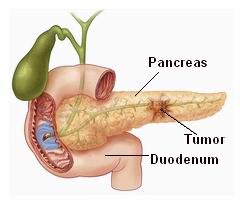
Pancreatic cancer is a disease in which malignant (cancer) cells form in the tissues of the pancreas. This is an organ that lies behind the stomach and in front of the spine.
Radiotherapy treatment can cure some cancers and can also reduce the chance of a cancer coming back after surgery. Radiotherapy is often given with the aim of destroying a tumor and curing the cancer as radical radiotherapy.
Causes
The exact reason or cause of this is mot clearly known. Smoking, race, increasing age, being diabetic, chronic pancreatitis and family history are factors that contribute to risk of having pancreatic cancer.
Symptoms
These and other symptoms may be caused by pancreatic cancer. Other conditions may cause the same symptoms. A doctor should be consulted if any of the following problems occur:
Diagnosis
If pancreatic cancer is suspected, the first step is to perform a series of tests. Imaging tests often are used to produce pictures of internal organs and tissues. If these tests detect pancreatic cancer that appears to be resectable (see the Staging section), surgery is often the next step. In some cases, a tumor marker CA 19-9 (cancer antigen) test also may be performed.
The following diagnostic tests may be used to help diagnose pancreatic cancer:
If imaging tests detect an abnormality that warrants further investigation, a biopsy may be performed. In a biopsy, a sample of tissue is removed and examined for cancer cells.
Treatment
There are three types of treatment methods for pancreatic cancer: surgery, chemotherapy, and radiation therapy. Treatment heavily depends on the stage of pancreatic cancer, type, and general health.
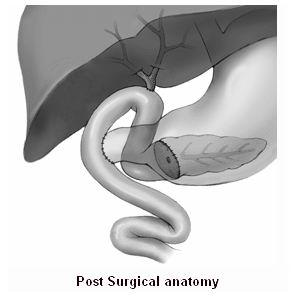
Surgery can be done to treat cases of pancreatic cancer that is considered curable or can be done to alleviate the symptoms caused by the tumor(s). A surgical procedure called a Whipple is most commonly performed in people whose cancer may be curable. During a Whipple, a large portion of the pancreas, part of the stomach, small intestine, gallbladder and bile duct are removed. Less common surgical methods include a total or distal pancreatectomy, the removal of the entire pancreas.
Prior to surgery, chemotherapy and radiation therapy may be given prior to surgery to increase the success of surgery by shrinking tumors and elimination of cancer cells. These treatments aren't for every patient and depends on stage of cancer and general health factors.
Radiation therapy is also an option for treating some people with pancreatic cancer. This type of treatment uses certain types of high-energy beams of radiation to shrink tumors or eliminate cancer cells. Radiation therapy works by damaging a cancer cell's DNA, making it unable to multiply. Although radiation therapy can damage nearby healthy cells, cancer cells are highly sensitive to radiation and typically die when treated. Healthy cells that are damaged during radiation are resilient and are often able to fully recover.
The other Oncology Procedures are
Few Major Hospitals for Treatment of Pancreatic Cancer are
Thailand, Malaysia, Singapore, Turkey and India are the most cost effective locations that offer up to almost 80% savings in comparison to the US.
SurgeryPlanet facilitates a plethora of services to the medical treatment traveler also which includes, a hassle free and discounted travel option, a welcome hand at the airport on arrival, travel in an air-conditioned car, round the clock service & support. Your medical evaluation is pre arranged with the least of waiting time. Once your assessment is complete and found medically fit, the procedure is immediately scheduled without a waiting period. Please read through our Services and Testimonials to understand and select your best options.
Major Treatments Abroad: Obesity / Bariatric Surgery | Spine Surgery | Stem Cell therapy | Fertility treatment | Knee replacement in India and Thailand | Heart Surgery | Organ transplant | ../ayurveda Treatment | Heart valve replacement | Hip resurfacing | Hospitals in India and Thailand for Laparoscopic Sterilization| Best hospitals in Asia | JCI & ISO certified Hospitals | Cost effective medical procedures | Healthcare tourism | Complete privacy for affordable cost | Weight loss procedures | Infertility treatment | Board certified physicians | Low cost surgeries
SurgeryPlanet is an Healthcare Facilitator and not a Medical service provider. The information provided in this website is not to be used for diagnosis or treatment of any medical condition or use for any medical purposes. We provide information solely for medical travel facilitation and do not endorse any particular health care provider, hospital, facility, destination or any healthcare service or treatment listed. We are not an agent for, or affiliated to any health care provider, or service listed in our website and is not responsible for health care services provided by them. Choice of hospital or doctor for your healthcare services is your independent decision. Consult your domestic licensed health care provider before seeking the services of any health care provider you learn about from our website.