Introduction
Navigating surgical care decisions often feels overwhelming when individuals and their loved ones face complex medical choices. Finding a dependable facility and an experienced specialist requires looking at numerous details, from clinical capabilities to overall patient support. SurgeryPlanet streamlines this healthcare journey by helping patients explore qualified medical centers and expert surgeons worldwide. Through clear information and organized guidance, the platform makes comparing surgical options straightforward and transparent. Whether individuals are planning local procedures or traveling abroad, having access to reliable data ensures informed preparation. Ultimately, the platform supports families in finding the right medical environment tailored to their unique health requirements.
Why Choosing the Right Hospital and Surgeon Matters
Selecting where and by whom a medical procedure is performed heavily influences the overall treatment experience. A successful outcome relies equally on advanced clinical infrastructure and the specialized expertise of the operating physician. Patients benefit greatly when they evaluate both the medical team and the facility together rather than looking at them as separate choices.
Important elements that shape a safe surgical journey include:
- Surgical experience and track record with specific procedures
- Hospital safety protocols and infection control measures
- Availability of advanced diagnostic tools and modern operating suites
- Intensive care and emergency support for optimal safety
- Clear communication between the medical staff and the patient
- Comprehensive recovery support and structured follow-up care
Evaluating these factors creates a balanced view of the medical environment, ensuring that patients receive holistic support from admission through complete recovery.
How Patients Can Explore Hospitals
Researching medical facilities is a foundational step in planning any surgical procedure. A well-equipped center provides the necessary safety net and technical backing required for complex treatments.
Hospital Experience
Facilities that regularly handle specific surgeries often have refined care pathways. This accumulated practice helps teams anticipate potential challenges and manage various medical scenarios efficiently.
Surgical and Medical Facilities
Modern operating rooms equipped with cutting-edge technology are essential. Beyond the operating theatre, patients should look for dependable diagnostic imaging, reliable laboratory services, and well-staffed intensive care units that stand ready if advanced support becomes necessary.
Patient Safety
Safety standards form the backbone of quality healthcare. Accredited hospitals adhere to strict hygiene guidelines, maintain rigorous infection control protocols, and operate with robust emergency response systems to protect patients at every stage.
International Patient Services
For individuals traveling away from home, specialized support departments make a significant difference. Dedicated international desks assist with appointment scheduling, language interpretation, medical record translation, local transportation, and comfortable accommodation arrangements.
How Patients Can Research Surgeons
Evaluating a physician involves looking beyond basic credentials to understand their specialization and approach to patient care. Gathering accurate background information helps build trust and mutual understanding before the procedure takes place.
Key areas to review when looking into a medical specialist include:
- Board certifications and recognized medical qualifications
- Core specialization and years of focused surgical practice
- Volume of similar procedures performed successfully
- Hospital affiliations and professional standing
- Communication style and willingness to address questions
- Approach to patient education regarding risks, benefits, and alternatives
Reviewing these attributes allows individuals to feel more confident and secure during consultations, fostering an open dialogue about their health needs.
Understanding the Relationship Between Hospitals and Surgeons
A skilled physician performs at their best when backed by a strong institutional framework. The synergy between a talented surgeon and a top-tier medical center creates an environment where patient safety and comfort remain prioritized.
Operating rooms require specialized nursing staff, expert anesthesiologists, and reliable biomedical engineering support. Similarly, post-operative recovery depends heavily on dedicated nursing care and physical rehabilitation services. Recognizing how these elements work in tandem ensures that patients do not overlook the vital infrastructure supporting their chosen physician.
How SurgeryPlanet Supports Healthcare Discovery
Accessing reliable medical information is essential for effective treatment planning. SurgeryPlanet acts as a bridge, helping patients navigate the vast landscape of global healthcare providers with greater ease.
The platform assists users by:
- Providing structured directories of verified hospitals and qualified surgeons
- Highlighting various surgical specialties and advanced treatment centers
- Offering comparative insights into different global healthcare destinations
- Organizing treatment details to prepare individuals for clinical consultations
- Facilitating transparent communication channels with medical providers
By organizing critical healthcare data into an accessible format, the platform empowers families to conduct thorough research without feeling lost in complex medical terminology.
What Patients Should Check Before Choosing a Surgical Hospital
Conducting a thorough evaluation of a healthcare facility helps prevent unexpected challenges during treatment. Patients and their caregivers benefit from reviewing specific institutional capabilities before finalizing their choice.
- Institutional Accreditation: Look for recognized national or international quality certifications.
- Specialized Infrastructure: Ensure the facility houses dedicated units for the required surgical specialty.
- Emergency Preparedness: Confirm the availability of 24/7 emergency care and blood bank services.
- Post-Operative Units: Check the quality and staffing ratios in recovery wards and intensive care units.
- Accessibility: Consider the geographic location, proximity to transport hubs, and local travel ease.
What Patients Should Check Before Choosing a Surgeon
Gathering precise details about a specialist ensures that the chosen physician aligns with the patient’s specific health condition and expectations.
- Licensure and Credentials: Verify that the doctor holds active medical licenses and relevant board memberships.
- Procedure Focus: Determine whether the surgeon routinely performs the exact procedure required.
- Hospital Accreditations: Confirm the primary operating hospitals where the physician holds privileges.
- Consultation Approach: Evaluate whether the doctor takes time to explain the procedure and listen to concerns.
- Peer Recognition: Look for contributions to medical research, academic teaching roles, or professional awards.
Online profiles and hospital directories provide useful starting points, though they should always be complemented by direct discussions with the medical team.
Understanding Surgical Treatment Options
Every medical condition presents unique characteristics, meaning that treatment paths vary from one person to another. What works well for one individual might not be suitable for someone else.
Determining the ideal approach depends closely on:
- The specific diagnosis and severity of the condition
- The patient’s complete medical history and prior treatments
- Age, overall physical fitness, and existing lifestyle factors
- Recent diagnostic test results and imaging scans
- The clinical judgment of the attending physician
Maintaining an open mind during medical evaluations allows patients to explore all viable options safely and realistically.
Comparing Surgical Care Options
Weighing multiple alternatives allows patients to make well-rounded choices tailored to their clinical and personal needs. Relying on a single perspective can limit awareness of better-suited alternatives.
- Compare clinical expertise across different medical centers.
- Review the range of technology and minimally invasive options available.
- Evaluate logistical convenience, including travel requirements and local support.
- Examine the depth of recovery support provided by the institution.
- Assess overall financial estimates to ensure complete transparency.
While financial planning is important, decisions should prioritize safety, clinical excellence, and long-term health outcomes.
Preparing Information Before Contacting a Hospital or Surgeon
Organizing medical documentation beforehand makes initial conversations with healthcare providers much more productive. Clear records enable doctors to offer precise assessments.
Helpful items to compile include:
- A chronological summary of symptoms and past treatments
- Recent diagnostic reports, blood tests, and biopsy results
- Imaging scans such as X-rays, MRIs, or CT scans on disc or secure digital formats
- A complete list of current prescription medicines and supplements
- Details of any known allergies or chronic health conditions
- A written list of specific questions regarding the proposed procedure and recovery
Well-prepared documentation helps clinical teams understand the case quickly and provide meaningful feedback.
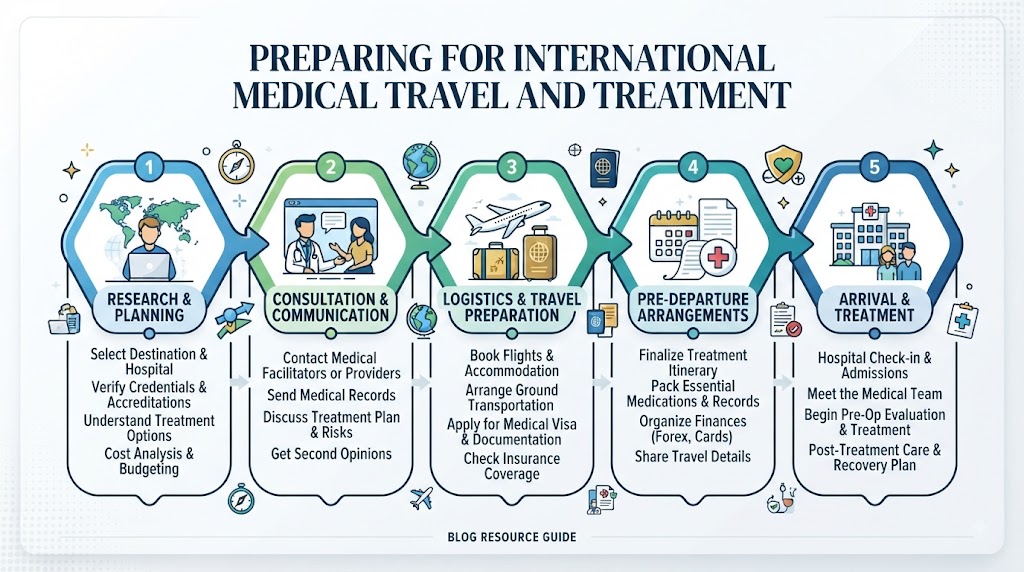
Planning Surgery as an International Patient
Traveling across borders for medical care introduces unique logistical factors that require careful advance coordination. Planning these details early reduces stress and ensures a smooth journey.
- Visa and Documentation: Verify medical visa requirements and official invitation letters from the hospital.
- Travel Timelines: Schedule flights keeping medical clearance and post-surgery travel restrictions in mind.
- Accommodation: Choose lodging options close to the hospital that accommodate resting patients.
- Language Assistance: Arrange for translators or hospital liaison officers if language barriers exist.
- Caregiver Support: Ensure a family member or trusted companion can travel and assist throughout the stay.
- Extended Stays: Plan for the required recovery period abroad before receiving clearance to fly home.
Understanding Surgery Costs
Financial transparency plays a vital role in medical planning. Surgical expenses generally encompass multiple components rather than a single fixed fee.
Key cost elements to clarify include:
- Initial specialist consultations and second opinions
- Pre-operative diagnostic tests, blood work, and imaging
- Surgeon fees and professional charges for the operating team
- Anesthesia services and specialized operating room usage
- Hospital room rent, nursing care, and dietary services during admission
- Post-surgery medications, surgical dressings, and medical supplies
- Follow-up checkups and potential rehabilitation sessions
Requesting a comprehensive, itemized financial estimate helps families avoid unexpected expenses and plan their budgets effectively.
Recovery and Follow-Up Care
Healing continues long after the surgical incision heals. Proper post-operative management is essential for regaining strength and achieving lasting health benefits.
- Adhere strictly to medication schedules prescribed by the medical team.
- Follow physical therapy or rehabilitation guidelines carefully.
- Attend all scheduled follow-up visits for physical examinations and suture removal.
- Monitor the surgical site for any signs of swelling, redness, or unusual pain.
- Maintain open communication with the treating hospital for any emerging questions during recovery.
Every recovery timeline is personal, and rushing the healing process can hinder long-term success.
Hospital and Surgeon Comparison Table
| Factor | Hospital | Surgeon |
| Experience | Experience with relevant surgical care and institutional case volume | Experience with similar procedures and specialized techniques |
| Expertise | Available multi-specialty medical and surgical support services | Area of surgical specialization and clinical focus |
| Facilities | Operating, diagnostic, intensive care, and support facilities | Access to appropriate hospital facilities and modern equipment |
| Safety | Hospital safety accreditations and emergency systems | Safe surgical practices and thorough patient assessment |
| Patient Care | Nursing, dietary, and international patient support services | Clear communication, counseling, and treatment guidance |
| Follow-Up | Continued hospital support and rehabilitation facilities | Post-surgery medical guidance and recovery monitoring |
Surgical Care Planning Comparison Table
| Area | What Patients Can Check | Why It Helps |
| Hospital | Facilities, experience, safety standards | Helps patients understand the care environment and safety levels |
| Surgeon | Qualifications and relevant experience | Helps patients research suitable surgical expertise and track records |
| Procedure | Available treatment choices and alternatives | Gives patients a clearer understanding of potential medical paths |
| Cost | Surgery and related medical expenses | Supports realistic financial planning without hidden surprises |
| Recovery | Rehabilitation and support services | Helps patients prepare physically and logistically for healing |
| Follow-Up | Post-surgery care and monitoring | Supports continued medical attention after returning home |
Common Mistakes Patients Should Avoid
Navigating surgical research requires caution to prevent common oversights that can impact care quality.
- Choosing solely based on the lowest price without evaluating clinical quality.
- Failing to verify the surgeon’s specific experience with the required procedure.
- Ignoring hospital safety accreditations and intensive care capabilities.
- Relying exclusively on unverified online reviews instead of professional credentials.
- Not understanding the proposed surgical procedure and its associated risks.
- Failing to ask about incidental costs beyond the primary surgical fee.
- Forgetting to plan for extended recovery timelines and post-discharge needs.
- Neglecting follow-up care arrangements after returning from treatment.
- Making final healthcare decisions without consulting qualified medical professionals.
Benefits of Researching Before Surgery
Taking the time to investigate healthcare options thoroughly offers significant advantages for patients and their families.
- Clearer understanding of available medical treatments and modern techniques
- More organized treatment planning and reduced administrative stress
- Greater confidence and clarity when speaking with medical specialists
- Realistic financial expectations with transparent cost breakdowns
- Smooth travel preparation for international or out-of-town patients
- Well-structured recovery planning for optimal healing outcomes
- Improved adherence to follow-up care requirements
How Patients Can Make Better Surgical Decisions
Making sound choices regarding surgical care involves gathering reliable information and consulting trusted medical experts. Comparing multiple accredited institutions provides a broader perspective on what modern medicine offers. Reviewing professional qualifications, understanding estimated expenses, and evaluating safety standards ensure that all aspects of treatment are accounted for. Ultimately, combining careful personal research with professional medical guidance allows individuals to approach their healthcare journey with peace of mind.
Frequently Asked Questions
1. How can SurgeryPlanet help patients explore hospitals and surgeons?
SurgeryPlanet provides structured information and directories that help patients research accredited hospitals, review surgeon profiles, compare treatment options, and prepare for medical consultations efficiently.
2. Why is hospital accreditation important when planning surgery?
Accreditation ensures that a medical facility adheres to strict safety, hygiene, and patient care standards, reducing risks and ensuring reliable emergency support during treatment.
3. What details should patients review when researching a surgeon?
Patients should check board certifications, years of specialized practice, procedure volume, hospital affiliations, and the surgeon’s communication approach during consultations.
4. Can international patients coordinate travel through SurgeryPlanet?
The platform helps international patients discover hospitals equipped with dedicated global patient departments that assist with visa letters, travel coordination, and accommodation guidance.
5. Why is it necessary to compare multiple surgical care options?
Comparing options allows individuals to evaluate different clinical environments, technological capabilities, recovery support systems, and cost estimates to find the most suitable fit.
6. What factors influence the total cost of a surgical procedure?
Total costs typically include surgeon fees, hospital room charges, operating room expenses, anesthesia, diagnostic tests, medications, and post-operative follow-up care.
7. How should patients prepare their medical records before a consultation?
Patients should organize a summary of symptoms, past medical histories, current medications, recent blood tests, and digital copies of imaging scans like MRIs or X-rays.
8. What should be considered during recovery planning?
Recovery planning involves arranging comfortable accommodation, understanding medication schedules, preparing for physical rehabilitation, and scheduling required follow-up checkups.
9. Why is online medical research not a substitute for a doctor’s consultation?
Online research provides general educational insights, whereas a qualified physician can evaluate unique personal health histories, perform physical exams, and offer tailored diagnoses.
10. How can patients ensure safe post-operative care after returning home?
Patients should maintain open communication channels with their treating medical team, follow prescribed rehabilitation routines strictly, and attend local follow-up evaluations.
Final Thoughts
Embarking on a surgical journey requires careful preparation, clear information, and trusted medical guidance. By thoroughly exploring hospital infrastructure, surgeon expertise, safety standards, and recovery needs, patients can approach their treatment with confidence. Platforms like SurgeryPlanet serve as valuable discovery tools, helping individuals navigate global healthcare options transparently. Taking time to plan every detail from initial research to post-operative follow-up censures a safer and more reassuring medical experience. Ultimately, informed decision-making paves the way for better health outcomes and lasting peace of mind.