Introduction
Robots are stepping out of labs and into our daily lives. They move boxes in busy warehouses, sweep hospital floors, and help build cars. But keeping these mechanical helpers running smoothly is not easy. It takes a special mix of software and management. This article explains how teams keep track of mechanical workers using RobotOps. You will learn how modern tools help engineers watch over their machines, fix software bugs, and keep physical fleets safe and fast.
What is RobotOps?
RobotOps is a short way to say robotics operations. Think of it like a control tower at a busy airport. Just as air traffic controllers guide airplanes, this practice helps people manage fleets of smart machines from a single desk.
Software engineers use DevOps to build computer programs. In the same way, robotics engineers use operations to run physical hardware. It combines coding, data tracking, and hardware care. When a machine breaks down or needs a software update, these tools make the fix quick and safe.
Why Robotics Operations Matter
Running a single robot in a test room is easy. Running fifty robots in a noisy factory is hard. Without proper Robotics Operations, things go wrong very fast. Robots might get lost, run out of power in the wrong spot, or crash into walls.
Good management keeps machines working safely. It stops unexpected downtime. When a machine reports an error, engineers know right away. They do not have to guess what went wrong. They can check the data and fix the issue before the whole assembly line stops.
Managing Many Machines at Once
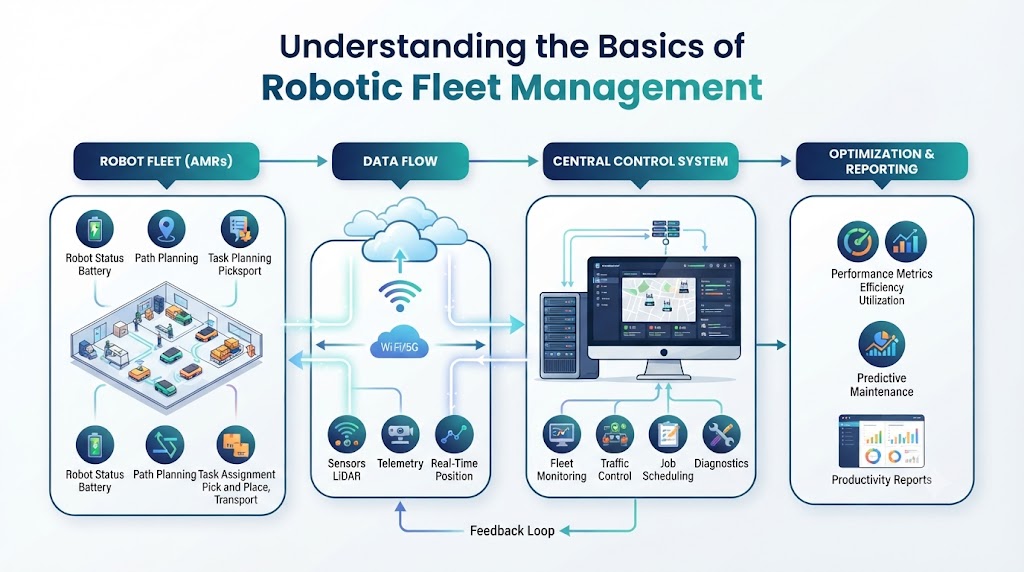
Controlling one machine takes a little work. Controlling a hundred machines needs a smart system. This is where Robot Fleet Management comes in. Fleet management software lets operators see where every machine is on a map.
It checks battery levels, job statuses, and travel paths. If one unit needs a recharge, the system sends it to a dock. If a path is blocked, the system finds a new route. This keeps all the units moving without human hands on every joystick.
| Fleet Feature | What It Does | Why It Helps |
|---|---|---|
| Live Tracking | Shows exact location on a map | Prevents traffic jams and crashes |
| Battery Check | Monitors power levels | Sends units to chargers automatically |
| Task Routing | Assigns jobs to the nearest worker | Speeds up daily warehouse work |
The Role of Industrial Robotics
Factories rely heavily on Industrial Robotics. These are the heavy-duty arms and automated tracks that weld metal, paint cars, and pack boxes. They move with exact precision every single time.
However, factory machines need constant care. Their joints wear out. Their sensors get dusty. Operations teams use software to watch the health of these heavy arms. If a motor gets too hot, the system sends a warning. This prevents expensive damage and keeps workers safe.
Powering Machines with Robotics Software
Hardware is only half of the puzzle. The brain inside the metal is Robotics Software. This includes the operating system, path planners, and safety checks.
Developers write code that tells the wheels when to turn and the cameras when to look. Good software makes decisions in milliseconds. It helps a machine stop if a person walks too close. Keeping this code updated across a whole fleet requires careful coordination and safe testing steps.
Testing Safely with Robot Simulation
Before pushing new code to a physical machine, engineers test it in a virtual world. This is called Robot Simulation. A simulation is a video game-like environment that mimics real physics, gravity, and friction.
Engineers run their code in this digital space first. If the virtual robot crashes into a virtual wall, no real metal breaks. This testing saves time and money. It makes sure new updates are safe before they run in a real factory.
Moving Smartly with Autonomous Mobile Robots
Many modern warehouses use Autonomous Mobile Robots. These are small, smart carts that carry heavy shelves from one place to another. They do not need tracks on the floor or wires in the concrete.
They use lasers and cameras to see their surroundings. They build their own maps and dodge people and boxes. Managing these moving carts requires strong wireless networks and clear software instructions.
Speeding Up Work with Robotics Automation
Manual work takes time and can lead to mistakes. Robotics Automation takes over boring and heavy tasks. It speeds up production lines and cuts down on errors.
When machines handle the heavy lifting, human workers can focus on planning, design, and problem-solving. This makes workplaces safer and much more efficient.
| Task Type | Manual Way | Automated Way |
|---|---|---|
| Material Moving | Walking and pushing heavy carts | Smart carts carry loads directly |
| Quality Check | Human eyes inspect every item | Cameras spot tiny flaws instantly |
| Data Logging | Writing notes on paper clipboards | Instant digital telemetry logs |
Inside the Robotics Operations Center
Large companies use a special room to watch their machines. This is the Robotics Operations Center. Large screens on the wall show live data feeds, error alerts, and performance charts.
Operators sit at desks and watch the fleet health. If a machine gets stuck, an operator can take remote control for a moment to guide it out. This central room keeps everything running smoothly around the clock.
The Power of ROS 2
Most modern developers build their software using ROS 2, which stands for Robot Operating System 2. It is an open-source set of software libraries and tools.
ROS 2 helps different parts of a machine talk to each other. The camera talks to the navigation brain. The battery monitor talks to the power system. Because it is standard across the industry, developers can share code and build better applications faster.
Frequently Asked Questions About RobotOps
What is RobotOps in simple terms? It is the set of tools and practices used to manage, update, and monitor robots in the real world.
Why do companies use fleet management software? It helps operators track locations, battery levels, and tasks for many machines at the same time.
What does telemetry mean in robotics? Telemetry means data sent by a robot about its status, health, and activity.
How does simulation help developers? It lets engineers test new code in a safe virtual world before putting it on real hardware.
What is ROS 2? It is a popular software framework that helps different parts of a robot communicate and work together.
Why are autonomous mobile robots popular? They can move around warehouses safely without needing physical tracks or human steering.
What happens in a robotics operations center? Operators watch live data, track fleet performance, and handle errors from one central place.
How do software updates reach physical units? Teams send updates securely over the air, much like a smartphone downloading a patch.
Is robotics operations only for large factories? No, any business using more than one smart machine can benefit from these practices.
Where can people learn more about these topics? Platforms like RobotsOps.com offer great educational resources for students and engineers.
Final Thought
Managing smart machines takes more than just good hardware. It requires careful planning, smart software, and steady observation. By using strong operational practices, teams can keep their fleets safe, fast, and reliable. Whether you are a student, an engineer, or just curious about technology, understanding how these systems work opens the door to the future of automation. Educational resources on platforms like RobotsOps.com make it easier than ever to learn the basics of modern machine management.