Introduction
Choosing where to have surgery is a big step. Hospital choice can matter a lot before your procedure. When you compare hospitals, you can ask useful questions about your care. It helps to look at surgical services, medical specialists, and hospital facilities. You should also check safety practices, costs, and follow-up care. A careful review helps you make informed choices with your doctor. However, no comparison can guarantee a safe surgery or a perfect result. Taking time to check these details helps you prepare for a safe and smooth experience.
What Does Hospital Comparison Mean?
Hospital comparison means looking at different medical centers to see what they offer. It helps patients understand their options before planning a procedure.
Patients may compare several key areas:
- Surgical services available
- Relevant surgeons or specialists
- Experience with the planned procedure
- Hospital facilities and clean spaces
- Safety and quality information
- Infection control practices
- Emergency support systems
- Accreditation or quality certifications
- Total costs and fees
- Patient support and follow-up care
You should always compare verified and reliable facts. Do not rely only on flashy advertisements or simple online ratings. Real details help you understand what to expect from your hospital choice.
Why Can Hospital Comparison Help With Surgery Safety?
Comparing hospitals is a smart way to gather facts. It helps you take an active role in your health journey.
This process may help patients in many ways:
- Identify important questions to ask your care team
- Understand what medical services are available
- Review safety-related information and clean practices
- Check if the hospital handles your specific procedure often
- Learn who will provide your hands-on care
- Compare follow-up support after you leave
- Understand possible costs and included services
- Prepare for calm discussions with healthcare professionals
Please remember that one hospital is not automatically safer just because of a famous name, a large building, a high price tag, or an online review. Always look closely at the facts.
What Safety Factors Should Patients Compare?
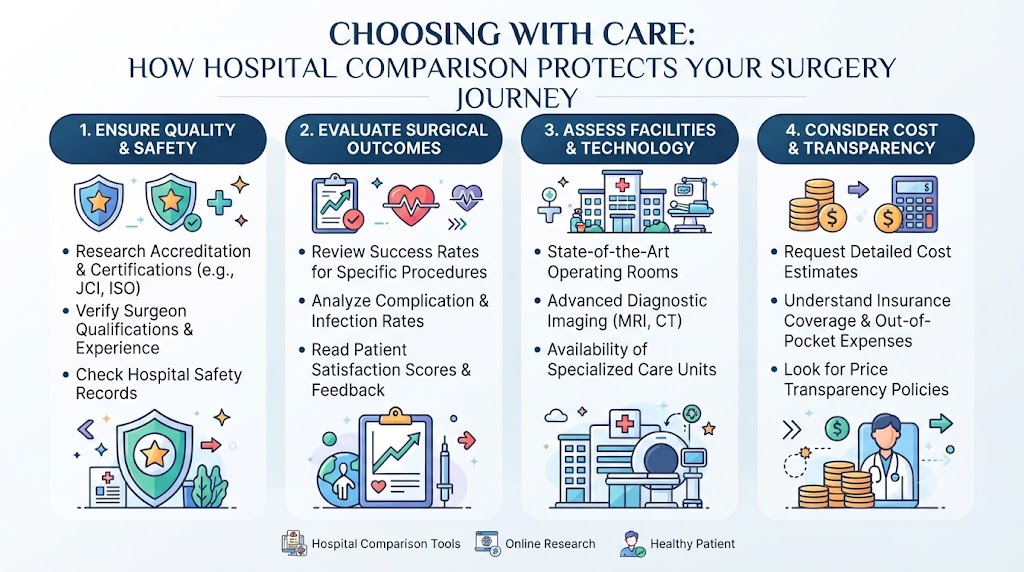
When you look at different medical centers, certain areas deserve close attention. Reviewing these topics helps you plan a safer surgery.
Surgical Services
Confirm that the hospital provides the exact surgery you need. Check if they have the right equipment and support staff for your specific care plan.
Surgeon and Specialist Information
Review the training, background, and experience of the doctors. Make sure they hold valid licenses and have experience with your condition. We do not rank surgeons or invent doctor details.
Experience With the Planned Procedure
Ask how often the surgical team performs your specific procedure. Hospitals with regular experience in a certain surgery often handle routine steps smoothly. Do not guess procedure numbers or success rates.
Emergency and Critical Care Support
Find out what happens if something unexpected occurs. Check if the hospital has critical care units and emergency support on site. Do not assume a facility exists unless verified.
Infection Prevention and Safety Practices
Ask about hospital cleanliness and infection control rules. Clean spaces and strict safety steps help lower the risk of problems after surgery.
Accreditation and Quality Information
Check if independent groups accredit the hospital. Valid quality seals show that the center meets certain standards. Keep in mind that a seal alone does not guarantee a safe surgery.
Anesthesia and Recovery Support
Ask who will manage your anesthesia during the procedure. Check what kind of recovery rooms and monitoring support are ready for you.
Follow-Up Care
Care after surgery is just as important as the operation itself. Check what kind of help you will receive once you return home.
Why Price Should Not Be the Only Factor
Many people look at cost first. However, a lower surgery quote does not always mean better value or safer care.
Always ask what the quoted price includes. A clear estimate should cover:
- Doctor and surgeon consultations
- Required lab tests and scans
- The surgery itself and operating room fees
- Anesthesia services
- Hospital room and stay
- Medicines and supplies
- Follow-up visits
- Other required services
Never pick a hospital based on price alone. Make sure you understand the full package of care before you decide.
| Safety Factor | Questions Patients Can Ask |
|---|---|
| Surgical Team | Who will manage my surgery and care? |
| Procedure | Does the hospital regularly provide this procedure? |
| Facilities | What support is available if problems occur? |
| Safety | What quality and safety information can I review? |
| Recovery | What follow-up care is available? |
| Cost | What does the full surgery estimate include? |
How to Compare Hospitals Before Surgery
Following a simple set of steps keeps your research clear and organized.
- Understand the surgery you may need.
- Make a list of suitable hospitals.
- Check whether each hospital provides the procedure.
- Review relevant specialist information.
- Check safety and quality information.
- Ask about facilities and emergency support.
- Compare the full cost.
- Review follow-up care options.
Questions That Can Should Ask Before Surgery
Preparation leads to better talks with your medical team. Keep these simple questions handy:
- Is this surgery performed at the hospital regularly?
- Who will perform or manage the procedure?
- What training and experience does the specialist have?
- What safety information can I review?
- What facilities are available if complications occur?
- Who will manage my anesthesia?
- What should I expect after surgery?
- What follow-up care is available?
- What does the full surgery cost include?
How Can Patients Check Hospital Information?
Gathering real facts takes a little effort. Patients can take these steps:
- Review official hospital information and brochures.
- Check relevant accreditation details.
- Ask direct questions to the hospital staff.
- Review procedure and specialist information carefully.
- Confirm what services are included in your plan.
- Ask for clear, written cost details.
- Discuss all medical questions with qualified healthcare professionals.
Do not base your final choice only on online ratings or ads.
Common Hospital Comparison Mistakes
Trying to rush your research can lead to simple errors. Avoid these common mistakes:
- Choosing a hospital only by the lowest price
- Relying only on online star ratings
- Trusting ads without checking real details
- Ignoring the background of the surgeon or specialist
- Not checking hospital safety information
- Failing to ask about emergency support
- Ignoring the need for good follow-up care
- Not checking what the surgery quote covers
- Assuming that comparing hospitals guarantees a safe outcome
Simple Surgery Safety Checklist
Use this quick checklist to review your notes before you make a choice:
- Required surgery is available at the center
- Relevant specialist information is checked
- Procedure experience is reviewed
- Safety and quality information is checked
- Emergency support is reviewed
- Anesthesia and recovery support are understood
- Full cost is understood and verified
- Follow-up care is planned
- Important questions are prepared
Note: This checklist supports your research. It does not replace professional medical advice.
Frequently Asked Questions
How can comparing hospitals help patients prepare for surgery? Comparing hospitals helps you review important care factors, ask better questions, and understand what to expect before your procedure.
What safety factors should patients compare between hospitals? Patients should look at surgical services, infection control, staff experience, emergency support, and hospital accreditation.
Should surgery cost be the main factor when choosing a hospital? No. Price is important, but safety, surgeon experience, and included services matter just as much as the final cost.
What should patients ask about the surgeon? Patients can ask about the surgeon’s training, licensing, and how often they perform the specific procedure you need.
Why should patients check hospital facilities before surgery? Checking facilities ensures the hospital has the right equipment, clean rooms, and critical care support ready if you need it.
Should patients ask about emergency and follow-up care? Yes. Knowing how the hospital handles emergencies and what care happens after surgery helps you plan a safer recovery.
Can hospital accreditation help patients compare hospitals? Yes. Valid accreditations show that a hospital meets set safety and quality standards, though it does not guarantee outcomes.
Does comparing hospitals guarantee a safer surgery? No. Comparison helps you make an informed choice, but it cannot guarantee a safe surgery or a specific medical result.
Conclusion Comparing hospitals helps patients review important surgery-related information before making a choice. You should look far beyond simple price tags and online ratings. Surgical services, medical specialists, safety data, clean facilities, emergency support, and follow-up care all matter. Using verified facts helps you ask better questions and talk clearly with your medical team. Always discuss your personal health decisions with qualified healthcare professionals.