Introduction
Finding the right hospital or surgeon for a planned surgical procedure can often feel overwhelming. When you or a loved one needs surgery, the sheer volume of choices, medical terminology, and logistical details can make the decision-making process difficult. Many patients struggle with knowing where to begin, how to evaluate different medical facilities, or how to identify a surgeon whose expertise matches their specific health needs. Having reliable guidance during this phase is essential because making an informed choice can significantly impact your comfort, confidence, and peace of mind.
This is where SurgeryPlanet steps in to help. SurgeryPlanet is designed to bridge the gap between individuals seeking medical care and the right healthcare providers by streamlining the process of finding suitable hospitals and surgeons. Rather than forcing you to navigate the complex healthcare landscape entirely on your own, SurgeryPlanet provides a structured framework to help you explore your options, understand your surgical care choices, and connect with appropriate professionals. By offering clear information and reducing the friction involved in the search process, SurgeryPlanet helps patients and their families make confident, well-informed healthcare decisions.
Understanding the Need for the Right Hospital and Surgeon
Choosing where to have surgery and who will perform the procedure are two of the most critical decisions you will ever make. Every patient has unique health requirements, preferences, and personal circumstances, meaning that a hospital or surgeon that works well for one person might not be the ideal fit for another.
Why Hospital Choice Matters for Surgery
A hospital is more than just a building where medical procedures take place; it is an environment that supports your entire surgical journey. Different hospitals specialize in different areas of medicine, possess varying levels of technological equipment, and maintain distinct standards for patient care and recovery support. Selecting a facility equipped with the right specialized departments and experienced support staff helps ensure that you receive comprehensive care from admission through post-operative recovery.
Why Surgeon Choice Matters
Your surgeon is the primary partner in your surgical treatment. Beyond medical credentials, finding a surgeon who communicates clearly, listens to your concerns, and explains procedures in terms you can understand is vital. Different surgeons have different areas of focus and varying degrees of experience with specific operations. Reviewing relevant background information ensures you find a practitioner whose expertise aligns closely with your medical needs.
The Value of Guidance Before Making a Decision
Because surgical options can vary widely, having access to structured guidance before making a final commitment is invaluable. Reviewing relevant information helps demystify the process, reduces anxiety, and empowers you to ask the right questions during consultations. Professional healthcare coordination acts as a helpful compass, pointing you in the direction of qualified providers without the stress of endless independent searching.
How SurgeryPlanet Connects Patients with Hospitals
Navigating healthcare systems across different regions or cities can be daunting. SurgeryPlanet simplifies this process by breaking it down into manageable, straightforward steps that help patients identify and connect with suitable medical facilities.
1. Understanding the Patient’s Needs
The connection process begins by looking closely at what the patient requires. This involves reviewing the specific type of surgery needed, any underlying health conditions, geographical preferences, and financial or logistical considerations. Understanding these details helps narrow down the vast array of hospital options to those that are genuinely relevant.
2. Identifying Suitable Hospital Options
Once the patient’s requirements are clear, SurgeryPlanet helps explore hospital options that match those criteria. This involves looking at facilities known for handling specific procedures, evaluating the presence of appropriate surgical units, and considering factors such as location and facility scale.
3. Sharing Relevant Patient Information
To establish a meaningful connection with a hospital, necessary medical details must be shared securely and accurately. SurgeryPlanet assists patients in organizing their medical summaries, test reports, and history so that hospital care teams can properly review the case before a consultation takes place.
4. Helping Patients Understand Available Options
Options can sometimes look confusing when presented with medical jargon. A key part of the connection process is translating complex choices into simple, understandable terms. Patients receive clear explanations regarding what different hospitals offer, helping them weigh their choices comfortably.
5. Connecting the Patient with an Appropriate Hospital
After narrowing down the choices, SurgeryPlanet facilitates the direct link between the patient and the chosen hospital’s coordination or international patient department. This step ensures that inquiries reach the right administrative and medical points of contact efficiently.
6. Supporting Communication When Needed
Clear communication is the backbone of safe medical travel and planned surgery. SurgeryPlanet supports ongoing dialogue between the patient and the hospital staff, ensuring that questions regarding scheduling, pre-operative instructions, and logistics are answered smoothly.
How SurgeryPlanet Connects Patients with Surgeons
Finding the right surgeon involves looking closely at specialization, professional background, and compatibility with the patient’s communication style. SurgeryPlanet structures this process to make finding a surgeon transparent and manageable.
Why Patients May Need Help Finding a Surgeon
Many patients look for a surgeon because they require a specialized procedure that may not be locally available, or because they want a second opinion from an experienced expert. Identifying the exact sub-specialty required for a specific condition can be difficult without guidance.
Identifying the Right Type of Surgeon
SurgeryPlanet helps patients understand which surgical specialty aligns with their medical condition—whether that involves orthopedic surgery, cardiac care, general surgery, or another discipline. Knowing the exact field of expertise required prevents wasted time and points patients directly toward qualified specialists.
Exploring Relevant Surgeon Options
Once the surgical category is identified, patients can review relevant surgeon options based on professional experience, hospital affiliations, and procedure volumes. This allows patients to view practitioners who routinely perform the exact surgery they need.
Preparing for a Surgical Consultation
Before meeting a surgeon, proper preparation is essential. SurgeryPlanet guides patients on what documents to compile, what questions to write down, and how to articulate their health goals. This preparation ensures that the consultation time is used as effectively as possible.
The Patient Journey with SurgeryPlanet
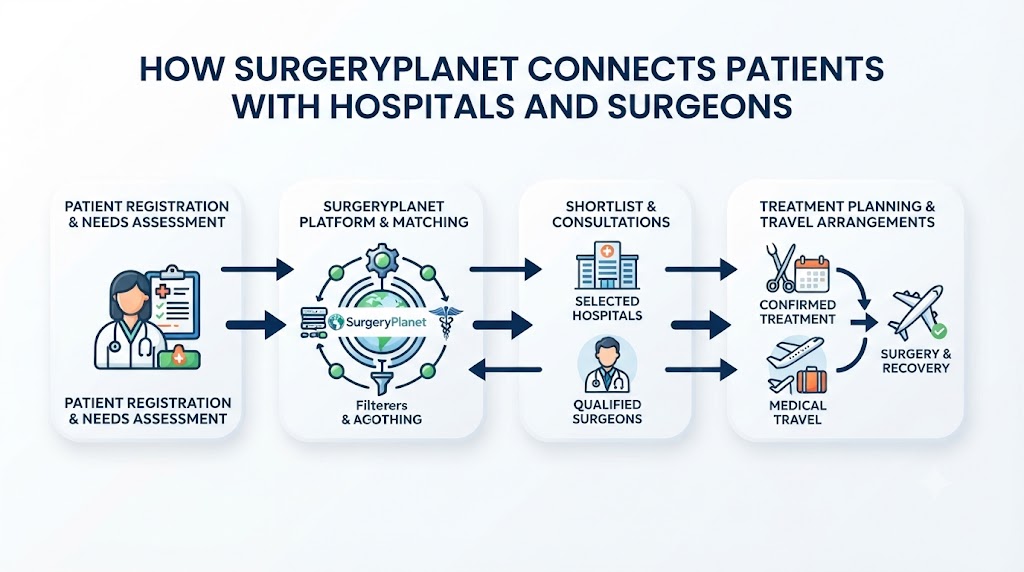
Understanding how the entire process flows from start to finish can give you a clear picture of what to expect. The patient journey with SurgeryPlanet follows a logical, step-by-step path designed to keep you informed and supported at every turn.
- Patient Shares Needs: The journey begins when you share your basic medical details, preferred locations, and the specific surgical procedure you are exploring.
- Information Review: Relevant details and medical reports are reviewed to better understand your clinical context and requirements.
- Exploring Options: Suitable hospital and surgeon options are researched and curated based on your specific case criteria.
- Receiving Information: You receive clear, digestible details about the matching hospitals and surgeons, outlining their specialties and facilities.
- Connecting with Providers: Communication is established between you and the chosen healthcare provider to discuss your treatment plan.
- Consultation and Planning: You engage in direct consultations with the surgeon to discuss risks, benefits, and expected recovery timelines.
- Ongoing Support: Further coordination, follow-up assistance, and logistical guidance are discussed to support your overall care experience.
What Information Should Patients Have Ready?
Being prepared before you reach out to a hospital or surgeon can speed up the evaluation process and help medical teams understand your case accurately. Here are the practical pieces of information you should try to have ready:
- Medical Reports: Recent diagnostic summaries or clinical notes from your primary doctor describing your condition.
- Previous Test Results: Copies of imaging studies (such as X-rays, MRIs, or CT scans) and relevant laboratory blood test results.
- Current Medications: A complete list of all prescription drugs, over-the-counter medicines, vitamins, and supplements you currently take.
- Previous Treatment Details: Summary of past therapies, physical therapy, or medications you have tried for this condition.
- Basic Patient Information: Full name, age, contact details, and relevant emergency contact information.
- Previous Surgery Details: Dates and descriptions of any surgeries you have undergone in the past, including how you recovered.
- Questions for the Surgeon: A written list of concerns, doubts, and goals you want to discuss during your upcoming consultation.
- Details About the Planned Procedure: Any information you already know about the recommended surgery or alternative treatments you have explored.
How to Choose the Right Hospital for Surgery
Choosing a hospital requires careful thought about several practical and medical factors. When evaluating your options, consider the following elements:
- Hospital Experience: Look at how frequently the facility performs your specific type of procedure. High-volume centers often possess refined protocols for specific surgeries.
- Surgical Facilities: Ensure the hospital features modern operating theaters, advanced intensive care units (ICUs), and sterile environments.
- Surgeon Availability: Check whether the hospital houses dedicated specialists who are readily available for your procedure and post-op care.
- Relevant Medical Departments: Verify that the hospital has supportive departments, such as cardiology, radiology, or rehabilitation, integrated on-site.
- Quality Standards: Look into whether the hospital holds recognized healthcare accreditations or quality certifications.
- Patient Reviews: Read about other patients’ experiences regarding cleanliness, nursing care, and comfort during their stay.
- Location: Consider whether the hospital is located in a region that is easy for you to travel to and accessible for family members supporting you.
- Cost: Understand the financial aspects, including estimated package costs, what is included, and potential expenses for unexpected complications.
- Follow-up Care: Inquire about how post-discharge care is managed, especially if you are traveling from afar.
- Communication Support: Check if the hospital offers assistance for international or out-of-town patients, including translation services or travel coordination.
How to Choose the Right Surgeon
Selecting a surgeon is a deeply personal decision that relies on trust, competence, and clear communication. Keep these practical considerations in mind:
- Relevant Area of Surgery: Ensure the surgeon’s primary practice focuses heavily on the specific body system or procedure you need.
- Experience with the Procedure: Ask how many times the surgeon has performed this exact operation and what their clinical track record looks like.
- Qualifications: Review their medical school training, board certifications, and specialized fellowship training.
- Consultation Options: Check if they offer initial virtual or in-person consultations to discuss your diagnosis before committing.
- Hospital Affiliation: Confirm which accredited hospitals the surgeon operates in, as the quality of the facility matters just as much as the surgeon’s skill.
- Patient Communication: Evaluate whether the surgeon answers your questions patiently and makes you feel comfortable rather than rushed.
- Follow-up Arrangements: Understand who will manage your care during the immediate recovery days following the operation.
- Questions to Ask: Prepare direct questions regarding potential risks, expected recovery duration, and alternative treatment options.
How SurgeryPlanet Can Make the Search Easier
Searching for surgical care independently can feel like assembling a complex puzzle without a picture box. SurgeryPlanet is structured to remove much of that guesswork. By organizing information logically and offering structured support, the platform makes the search easier in several practical ways:
- Easier Access to Information: Instead of browsing dozens of disconnected hospital websites, patients can find consolidated, relevant details in one place.
- Better Understanding of Options: Complex medical choices are explained simply, helping patients grasp the differences between various hospitals and surgical approaches.
- Connecting with Relevant Providers: The platform bridges the gap between patient inquiries and qualified healthcare providers, streamlining the initial outreach phase.
- Reducing Search Confusion: Clear steps and structured guidance cut through the noise, minimizing the stress and uncertainty of planning medical care.
- Preparation Support: Patients receive practical tips on what records to gather and what questions to ask, ensuring they step into consultations feeling ready.
- Smoother Communication: Facilitating initial contact helps bridge language or administrative gaps, making dialogue with hospital coordinators much more straightforward.
What Patients Should Ask Before Choosing a Surgeon or Hospital
Before finalizing your decision, arming yourself with the right questions helps ensure there are no surprises down the road. Consider asking your care coordinator or medical provider the following questions:
- Does the surgeon regularly perform this specific type of procedure?
- What specific experience does the surgeon have with cases similar to mine?
- Does the hospital have all the specialized facilities and critical care units needed for my procedure?
- What medical records, tests, or summaries should I share before my official consultation?
- What are the expected steps of my treatment plan from admission to discharge?
- What costs should I anticipate, and are there itemized estimates available?
- What kind of follow-up care and rehabilitation support will I need after leaving the hospital?
- Who can I contact directly if I have questions or run into issues during the planning phase?
Benefits of Connecting with the Right Surgical Care Provider
Finding and connecting with the right surgical care provider through a structured platform offers several meaningful advantages for patients and their families:
- Better Understanding of Surgical Options: Clear insights help you comprehend the nature of your proposed treatment and what recovery entails.
- Easier Access to Qualified Specialists: Direct pathways guide you toward experienced surgeons whose practice matches your diagnosis.
- More Informed Decisions: Access to structured hospital details empowers you to weigh your choices based on safety, facilities, and personal preferences.
- Less Comparison Confusion: Organized information prevents you from feeling overwhelmed by conflicting or overly technical data.
- Better Consultation Preparation: Knowing what to expect and what documents to bring helps you make the most of your time with the surgeon.
- More Organized Communication: Structured coordination ensures that your medical history reaches the right hands smoothly and securely.
Challenges Patients May Face
Navigating surgical care is rarely completely smooth. Patients often encounter common hurdles along the way, but understanding them can help you manage them effectively:
- Not Knowing Which Hospital to Choose: With countless facilities worldwide, selecting the right one can feel paralyzing. Solution: Rely on structured checklists focusing on specialized departments, safety accreditations, and patient support services.
- Finding the Right Surgeon: Identifying a specialist with the precise experience needed for your condition can be difficult. Solution: Focus on surgeon procedure volumes, board certifications, and peer reputations.
- Understanding Medical Terms: Healthcare language is often filled with complex jargon. Solution: Ask your care coordinator or doctor to explain terms in plain, everyday language.
- Comparing Surgical Options: Weighing multiple hospitals or treatment plans can create mental fatigue. Solution: Break comparisons down into simple categories like cost, location, recovery support, and facility experience.
- Managing Medical Records: Keeping track of imaging files, lab results, and past clinical notes is frequently messy. Solution: Digitize your records into a single folder or cloud storage space before beginning your search.
- Understanding Costs: Hidden fees or unclear billing structures can cause financial anxiety. Solution: Request comprehensive, itemized cost estimates covering hospital fees, surgeon fees, and expected post-op care.
- Communicating with Providers: Distance, time zones, or administrative barriers can slow down responses. Solution: Use structured coordination platforms that facilitate smooth, reliable messaging channels.
- Preparing for Surgery: Mental and physical pre-operative preparation requires clear guidance. Solution: Follow pre-op checklists provided by your surgical team closely, and write down any doubts as they arise.
Preparing for a Surgical Consultation
A surgical consultation is your opportunity to meet the medical team, evaluate your options, and ask important questions. Preparing properly ensures you get the clarity you need:
- Gather Your Medical Records: Collect all relevant clinical summaries, doctor notes, and diagnostic reports in one organized file.
- Keep Test Results Ready: Ensure recent scans (such as MRIs or X-rays) and lab work are accessible, either in digital formats or physical copies.
- Make a List of Current Medications: Write down the exact names and dosages of every prescription drug, vitamin, and supplement you take.
- Write Down Your Questions: Compile a list of specific concerns regarding the surgery, recovery timeline, and potential risks so you do not forget them during the talk.
- Note Previous Treatments: Be ready to explain what other therapies or medications you have tried before arriving at this surgical option.
- Ask About Next Steps: Clear up what happens immediately after the consultation, including scheduling, pre-op testing, and arrival instructions.
- Understand the Process: Ensure you leave the consultation with a firm grasp of what the surgery entails and how your post-operative care will be handled.
How Technology Is Changing Patient and Surgeon Connections
Technology continues to reshape how patients discover, evaluate, and connect with healthcare providers. While traditional methods relied entirely on word-of-mouth or local referrals, modern tools have opened up new avenues for care exploration:
- Online Consultations: Virtual appointments allow patients to speak with surgeons across distances before deciding to travel for a procedure, saving time and reducing early travel expenses.
- Digital Medical Records: Secure cloud storage and digital file transfers make sharing diagnostic scans and clinical summaries with overseas or out-of-town hospitals fast and secure.
- Online Communication Channels: Messaging platforms and coordination portals enable continuous, direct dialogue between patients and hospital administrative staff, ensuring quick answers to logistical questions.
- Remote Healthcare Support: Digital tracking and telehealth follow-ups make it easier for patients to monitor recovery progress even after returning home from a hospital stay.
- Easier Access to Healthcare Information: Educational resources online empower patients to research conditions, understand surgical procedures, and participate actively in their own healthcare decisions.
Why Clear Surgery Guidance Matters
Having access to clear, reliable, and straightforward guidance before undergoing surgery is essential for several reasons. Healthcare decisions should never be made in confusion or under pressure. Clear information enables you to:
- Fully understand the scope of your choices and what different medical pathways involve.
- Ask targeted, meaningful questions during consultations with medical professionals.
- Check relevant hospital and surgeon details thoroughly to ensure peace of mind.
- Prepare adequately for consultations, travel, and post-operative recovery.
- Make calm, informed decisions aligned with your personal health goals.
- Maintain open, honest dialogue with qualified healthcare professionals at every step of your journey.
Frequently Asked Questions
How does SurgeryPlanet connect patients with hospitals?
SurgeryPlanet helps patients by reviewing their specific medical needs, matching them with suitable hospital facilities that handle their required procedures, and facilitating secure communication with hospital coordinators to streamline the planning process.
How can SurgeryPlanet help patients find surgeons?
The platform guides patients in identifying the correct surgical specialty for their condition and presents relevant surgeon options based on professional background, clinical focus, and hospital affiliations.
What information should patients share when looking for a surgeon?
Patients should share relevant medical reports, previous diagnostic test results, a list of current medications, details about past treatments, and basic personal information to help specialists evaluate their case accurately.
How should I choose a hospital for surgery?
You should evaluate hospitals based on their experience with your specific procedure, the quality of their surgical facilities, safety standards, patient reviews, location, and the availability of comprehensive follow-up care support.
How can I choose the right surgeon?
Look for a surgeon who specializes in your specific procedure, has extensive experience, holds strong professional qualifications, communicates clearly, and operates in an accredited medical facility.
What questions should I ask a surgeon before surgery?
You should ask about the surgeon’s experience with the procedure, expected recovery timelines, potential risks, required pre-op tests, hospital facilities, and who will manage your post-operative care.
What should patients check before choosing a hospital?
Patients should check the hospital’s accreditation, specialized department capabilities, infection control standards, pricing transparency, and the availability of assistance for out-of-town or international visitors.
How can patients prepare for a surgical consultation?
Patients can prepare by gathering all medical records and imaging files, writing down a list of current medications, preparing a set of specific questions, and noting previous treatments they have tried.
Why is it important to compare hospitals and surgeons?
Comparing options helps ensure you find a medical facility and specialist that align with your specific health needs, comfort level, and treatment expectations, resulting in a more confident healthcare journey.
How can SurgeryPlanet make the search for surgical care easier?
SurgeryPlanet reduces search confusion by consolidating hospital and surgeon options, providing clear explanations of available choices, and streamlining communication between patients and healthcare providers.
Conclusion
Finding the right hospital and surgeon is a foundational step toward a successful surgical experience and a smooth recovery. Because surgical care involves significant personal and medical choices, having access to clear, reliable, and structured information is vital. It empowers you to understand your options, ask the right questions, and approach consultations with confidence. SurgeryPlanet helps bridge the gap between patients and healthcare providers by simplifying the search process, organizing relevant facility and surgeon options, and facilitating smooth communication. If you are exploring surgical care options and need guidance on connecting with suitable hospitals and surgeons, visit SurgeryPlanet today to take your next step with confidence.