Introduction
When people think about traveling to another country for medical care, they usually picture choosing a famous hospital, booking a flight, and packing their bags. However, medical tourism involves much more than simply selecting a facility. International patients often face a complex maze of challenges, ranging from language barriers and unfamiliar healthcare systems to coordinating medical records, verifying surgeon credentials, managing travel logistics, and budgeting for hidden costs.
Because planning surgery abroad can feel overwhelming when handled alone, many patients turn to professional support systems. This is where healthcare facilitation comes into play. A healthcare facilitator acts as a knowledgeable guide and coordinator, helping patients navigate the intricate steps of medical travel. Reliable support can transform an intimidating, stressful process into a well-organized, manageable journey. Platforms like SURGERYPLANET.COM are designed to help international patients connect with medical resources, understand their options, and coordinate the various moving parts of their healthcare travel.
What Is Healthcare Facilitation in Medical Tourism?
Understanding healthcare facilitation is the first step for anyone considering treatment outside their home country. Many people wonder what a facilitator actually does and how they fit into the broader medical landscape.
Meaning of Healthcare Facilitation
Healthcare facilitation refers to the professional coordination and administrative support provided to patients traveling across international borders for medical procedures. It encompasses everything from initial research and hospital matching to appointment scheduling, record transfer, travel planning, and local support coordination.
Facilitator vs. Healthcare Provider
It is vital to draw a clear line between a healthcare facilitator and a medical provider:
- Healthcare Facilitator: Helps with research, communication, logistics, coordination, and connecting patients with medical institutions. They do not perform medical procedures or provide clinical diagnoses.
- Hospital or Surgeon: Delivers actual medical consultations, clinical evaluations, diagnostics, surgical procedures, and post-operative medical care.
How Facilitators Help International Patients
For an international patient, navigating a foreign healthcare system can be daunting. A facilitator bridges the gap between the patient and foreign medical providers. They simplify the search process, help organize medical files, and make sure that questions are answered before the patient ever boards a plane.
Why Medical Tourism Can Be Difficult to Plan
Planning medical treatment abroad independently requires managing a massive checklist of tasks. Without professional guidance, patients and their families often find themselves struggling with the sheer volume of details required.
The Medical Travel Checklist
- Finding Hospitals: Researching foreign institutions to evaluate their safety standards, facilities, and accreditations.
- Finding Surgeons: Reviewing doctor qualifications, areas of expertise, and historical experience with specific procedures.
- Comparing Treatment Options: Understanding different surgical approaches, technologies, and recovery expectations.
- Managing Medical Information: Gathering, translating, and securely sharing detailed medical records with overseas providers.
- Evaluating Costs: Calculating total expenses, including surgeon fees, hospital stays, diagnostics, medications, and unexpected overages.
- Communicating Across Borders: Overcoming language differences, time zone gaps, and unfamiliar medical terminology.
- Organizing Travel Logistics: Securing medical visas, booking appropriate flights, and arranging local ground transportation.
- Arranging Accommodation: Finding safe, comfortable, and accessible lodging for the patient and accompanying family members during recovery.
- Planning Post-Treatment Care: Coordinating local follow-up care with physicians back home once the trip is completed.
Attempting to manage all of these moving parts simultaneously can lead to high stress and confusion, which is why structured support is so valuable.
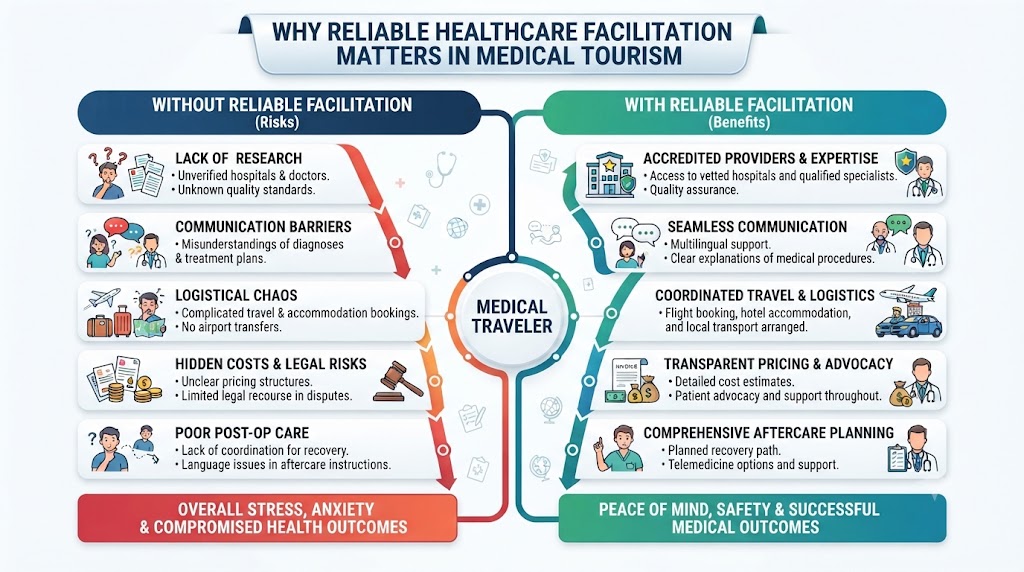
Why Reliable Healthcare Facilitation Matters
Having a reliable partner to help coordinate medical travel brings numerous practical benefits to patients and their families. While facilitation does not guarantee specific medical outcomes, it significantly streamlines the planning phase.
Easier Access to Healthcare Information
Finding clear, unbiased, and accurate information about hospitals abroad can be difficult. Reliable facilitators help patients access organized details about hospital departments, medical staff, and available treatments so they can make informed choices.
Better Organization and Time Management
Medical travel involves strict timelines, prompt document submissions, and coordinated scheduling. A facilitator keeps every step organized, reducing delays and minimizing administrative friction.
Objective Comparison Support
Patients are often emotionally invested in their health decisions, making it hard to compare different options objectively. Facilitators help lay out choices side by side, highlighting factors such as hospital infrastructure, international patient services, and logistical ease.
Enhanced Communication and Coordination
Language barriers can cause dangerous misunderstandings in healthcare settings. Facilitators help ensure that medical questions are translated accurately, clinical notes are properly communicated, and appointments run smoothly.
How a Healthcare Facilitator Can Help Patients
Working with a reliable healthcare facilitator involves a step-by-step process designed to keep patients informed and supported throughout their medical journey.
- Understanding Patient Needs: Reviewing the patient’s specific health goals, travel preferences, and budget considerations.
- Collecting Medical Information: Gathering necessary medical history, scans, and doctor notes to share securely with prospective hospitals.
- Exploring Suitable Hospital Options: Identifying medical centers that possess the appropriate departments and safety accreditations for the requested procedure.
- Identifying Relevant Specialists: Connecting patients with experienced surgeons and medical teams who specialize in their specific condition.
- Sharing Information Securely: Transmitting clinical summaries to hospitals for initial evaluation and preliminary treatment planning.
- Helping Patients Understand Options: Explaining the feedback received from hospitals in clear, simple language without medical jargon.
- Supporting Communication: Facilitating smooth dialogue between the patient and the overseas medical team for pre-trip consultations.
- Assisting with Treatment Planning: Helping outline the timeline for hospital admission, surgery, and initial recovery.
- Coordinating Travel Logistics: Offering guidance on visa application processes, accommodation options, and local transport.
- Arranging Follow-Up Guidance: Ensuring the patient knows how to manage recovery notes and share reports with their local doctor upon returning home.
Why Hospital Selection Matters in Medical Tourism
Choosing the right hospital is one of the most critical decisions in medical travel. Patients must look beyond marketing brochures and evaluate facilities based on concrete safety and quality markers.
Key Factors to Evaluate
- Accreditation: Check whether the hospital holds recognized international accreditations, such as Joint Commission International (JCI) or national equivalent quality standards.
- Specialized Departments: Ensure the hospital has dedicated, well-equipped units specifically for the required medical specialty.
- Infection Control and Safety Standards: Look for transparent protocols regarding surgical safety, intensive care units, and sterile environments.
- International Patient Services: Facilities that frequently treat global travelers usually offer dedicated translation support, visa assistance, and specialized patient care coordinators.
- Transparent Pricing: Reliable hospitals provide clear breakdowns of estimated treatment costs before the patient commits to traveling.
Note: Hospital accreditations and facility details should always be independently verified by the patient or through reliable verification channels.
Why Choosing the Right Surgeon Matters
A hospital building and modern technology are only part of the equation; the skill, experience, and communication style of the operating surgeon are paramount.
Evaluating Medical Professionals
- Qualifications and Credentials: Verify board certifications, specialized training, and medical degrees from recognized institutions.
- Procedure Experience: Inquire about how frequently the surgeon performs the specific procedure the patient needs.
- Hospital Affiliation: Ensure the surgeon operates within a fully accredited, well-equipped hospital rather than an unverified private clinic.
- Consultation Quality: A trustworthy surgeon takes time to explain the procedure, discuss potential risks, answer patient questions thoroughly, and never pressures a patient into surgery.
- Follow-Up Commitment: Confirm that the surgeon provides comprehensive post-operative instructions and coordinates with the patient’s local medical team.
No surgeon should ever be labeled as “the absolute best” without objective, verifiable performance metrics, and no medical professional can guarantee a 100% risk-free outcome.
Healthcare Facilitation vs. Healthcare Provider
Maintaining a clear distinction between the entities involved in medical tourism protects patients from unrealistic expectations.
| Feature / Service | Healthcare Facilitator (e.g., SurgeryPlanet.com) | Healthcare Provider (Hospital / Surgeon) |
| Primary Role | Coordination, research, travel planning, logistics | Clinical diagnosis, medical advice, surgery, treatment |
| Patient Interaction | Administrative support, communication relay, guidance | Medical consultation, physical examination, clinical care |
| Medical Responsibility | None (does not practice medicine) | Full clinical responsibility for treatment |
| Key Deliverables | Hospital options, cost estimates, travel tips | Surgical execution, prescriptions, post-op medical care |
Recognizing this division ensures patients look to their surgeons for clinical decisions and to their facilitators for logistical support.
How SURGERYPLANET.COM Supports Medical Travelers
As an experienced platform in the medical tourism space, SURGERYPLANET.COM focuses on bridging the information gap for patients seeking care across borders.
Core Areas of Support
- Exploring Options: Helping patients research international healthcare landscapes in a structured manner.
- Connecting with Providers: Assisting in establishing secure communication channels with accredited hospitals and qualified specialists.
- Comparing Choices: Providing educational content and organizational tools to evaluate different treatment destinations and facilities.
- Process Education: Demystifying the medical travel timeline, from initial document submission to returning home for recovery.
SURGERYPLANET.COM acts strictly as a healthcare facilitator and informational resource. It does not provide medical diagnoses, clinical treatments, or professional healthcare advice.
What Patients Should Check Before Using a Healthcare Facilitator
Before committing to any medical tourism facilitator, patients should conduct due diligence to ensure the service is trustworthy, transparent, and reliable.
Practical Due Diligence Checklist
- Clarity of Role: Does the facilitator clearly state that they provide coordination and logistics rather than medical treatment?
- Transparent Services: Is there a clear description of what services are included and whether any fees apply?
- Hospital Verification: Do they work with recognized, accredited hospitals with verifiable credentials?
- Data Privacy: Do they have secure methods for handling sensitive personal medical records?
- Cost Transparency: Do they encourage transparency regarding hospital bills, surgeon fees, and travel expenses?
- Travel Guidance: Do they offer practical assistance or guidance with visas, local accommodation, and flight timing?
Patients should always verify critical details independently and speak directly with the treating medical team before finalizing travel plans.
Why Transparent Cost Information Matters
One of the biggest pitfalls in medical tourism is unexpected expenses. Budgeting for medical travel requires looking at the total financial picture rather than just the quoted price of a surgical procedure.
Elements of Medical Travel Budgets
- Initial specialist consultations and second opinions
- Pre-surgical diagnostic tests and laboratory work
- Hospital facility fees and operating room charges
- Surgeon and anaesthesiologist fees
- Prescribed post-operative medications and medical supplies
- International flights for the patient and a caregiver
- Local ground transportation (airport transfers and clinic visits)
- Accommodation during the recovery period (which may be longer than expected)
- Medical visa fees and international travel insurance
- Potential extended stay costs if healing takes longer than anticipated
Asking for itemized cost estimates helps prevent financial surprises during or after the trip.
Why Communication and Coordination Matter
International medical travel bridges different languages, cultures, and administrative systems. Effective communication is the thread that holds the entire journey together.
Overcoming Communication Barriers
Language differences can lead to misunderstandings regarding medication dosages, surgical consents, and post-operative care instructions. Reliable facilitators help ensure professional medical translation is available when needed. Furthermore, organizing medical records into clear, standardized formats allows foreign doctors to review patient history accurately, ensuring safer and more efficient clinical evaluations.
Medical Records and Patient Information
When reaching out to overseas hospitals through a facilitator, preparing accurate medical documentation is essential. Healthcare providers need a clear picture of the patient’s health status to offer a realistic preliminary assessment.
What to Prepare
- A detailed medical history outlining previous conditions and surgeries
- Recent laboratory test results and blood work
- Diagnostic imaging files (X-rays, MRIs, CT scans) with official radiology reports
- A complete list of current medications, supplements, and known allergies
- Specific notes or questions from the patient’s local doctor
Providing complete and accurate information helps medical teams evaluate cases correctly while avoiding unnecessary delays.
Follow-Up Care After Medical Tourism
The medical tourism journey does not end when the surgery is successfully completed. Planning for post-treatment recovery is just as important as planning the trip itself.
Key Considerations for Recovery
- Local Doctor Coordination: Establishing a connection with a local physician in the home country who agrees to oversee routine post-operative checks.
- Recovery Timelines: Understanding how long the patient must stay in the destination country before receiving clearance to fly.
- Medication Management: Ensuring prescriptions can be filled locally and that the patient understands dosage instructions.
- Emergency Protocols: Knowing who to contact at the treating hospital if unexpected symptoms arise after returning home.
Recovery varies greatly depending on the type of procedure and the individual patient’s health profile.
Challenges and Limitations of Healthcare Facilitation
A balanced view of medical tourism requires acknowledging that no facilitator can eliminate every risk. Transparency builds trust, and patients should be aware of potential limitations.
Potential Risks to Keep in Mind
- Clinical Risks: Every surgical procedure carries inherent medical risks, regardless of where it is performed.
- Travel Stress: Long flights and unfamiliar environments can be physically demanding during the recovery phase.
- Unforeseen Expenses: Complications can lead to extended hospital stays and higher-than-expected costs.
- Cultural and Systemic Differences: Navigating foreign healthcare environments requires patience and adaptability.
Understanding these challenges helps patients prepare mentally and logistically for their medical journey.
How to Plan Medical Tourism with Better Preparation
A structured, step-by-step approach helps reduce anxiety and ensures that nothing important is overlooked.
Phase 1: Before Choosing Treatment
- Consult a qualified local doctor to discuss your health needs and whether travel is safe for you.
- Research medical tourism options thoroughly and understand the general process.
- Evaluate multiple hospitals and surgeons using objective safety criteria.
Phase 2: Before Travelling
- Gather and organize all necessary medical records and imaging files.
- Confirm treatment details, schedules, and itemized cost breakdowns with the hospital.
- Check visa requirements, book appropriate flights, and arrange comfortable lodging near the medical facility.
- Review international health insurance policies to see what coverage applies.
Phase 3: During Treatment
- Maintain open, honest communication with your surgical and nursing teams.
- Ask questions if anything is unclear about your procedure or medications.
- Keep all important medical and travel documents secure and accessible.
Phase 4: After Returning Home
- Follow your discharge instructions and recovery guidelines strictly.
- Share your surgical summary and hospital notes with your local doctor.
- Monitor your healing process and seek prompt medical attention if any concerning symptoms develop.
How Technology Is Changing Medical Tourism Facilitation
Technology continues to reshape how international patients research and coordinate medical travel. Digital advancements have made cross-border healthcare communication faster and more transparent.
- Online Consultations: Video calls allow patients to speak with overseas specialists before booking travel.
- Digital Medical Records: Secure cloud storage and encrypted file transfer enable rapid sharing of diagnostic imaging and lab results.
- Virtual Care Coordination: Messaging platforms and mobile apps help patients stay in touch with coordinators and support teams throughout their journey.
While technology streamlines coordination, it remains a tool to support—not replace—in-person clinical evaluations and medical expertise.
Frequently Asked Questions
What is healthcare facilitation in medical tourism?
Healthcare facilitation involves administrative, logistical, and organizational support provided to patients traveling internationally for medical care, helping them navigate hospital choices, travel planning, and communication.
Why do medical travelers use healthcare facilitators?
Travelers use facilitators to save time, reduce the confusion of researching foreign hospitals, organize medical records, and receive guidance through complex logistical steps like travel and accommodation planning.
What does a medical tourism facilitator do?
A facilitator helps patients research healthcare options, shares medical files with hospitals, coordinates communication with medical staff, assists with travel planning, and organizes follow-up logistics.
Is a healthcare facilitator the same as a hospital or doctor?
No. A facilitator provides logistical and administrative coordination. They do not practice medicine, provide clinical diagnoses, or perform medical treatments.
How can a facilitator help patients find hospitals abroad?
A facilitator helps patients identify accredited hospitals that match their specific treatment requirements by providing structured information about facilities, safety standards, and international patient departments.
Can a healthcare facilitator help patients find surgeons?
Yes, a facilitator can help connect patients with qualified surgeons who specialize in required procedures, allowing patients to review professional qualifications before making a decision.
What should patients check before choosing a medical tourism facilitator?
Patients should check the facilitator’s transparency regarding services, hospital verification standards, data privacy practices, cost disclosures, and clarity about their non-medical role.
Why is cost transparency important in medical tourism?
Cost transparency helps patients budget accurately by accounting for all potential expenses, including hospital fees, surgeon charges, diagnostics, medications, travel, and extended accommodation stays.
Why is follow-up care important when travelling abroad for treatment?
Follow-up care ensures safe healing after a procedure. Patients must plan for post-operative monitoring, local doctor coordination, and medication management before starting their medical journey.
How can SURGERYPLANET.COM help medical travelers?
SURGERYPLANET.COM helps medical travelers explore healthcare options, connect with hospitals and surgeons, understand the medical tourism process, and access practical planning resources.
Conclusion
Medical travel offers unique opportunities for patients seeking specialized care abroad, but it also demands careful planning, rigorous research, and realistic expectations. Reliable healthcare facilitation plays a vital role in cutting through the confusion, helping international patients organize their medical records, evaluate verified hospitals and surgeons, and manage travel logistics smoothly.
While facilitators provide indispensable administrative and coordination support, patients should always make medical decisions in direct consultation with qualified healthcare professionals. By approaching medical tourism with thorough preparation, clear cost awareness, and dependable guidance, patients can navigate their healthcare journey with greater confidence and peace of mind.